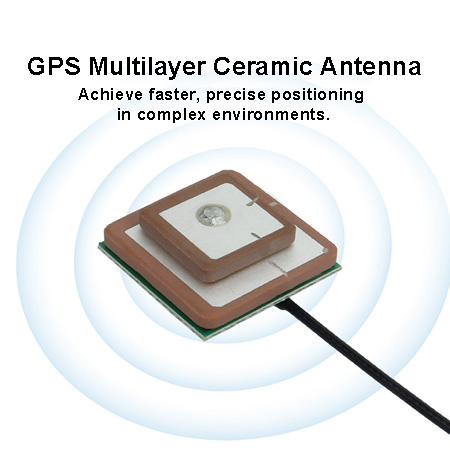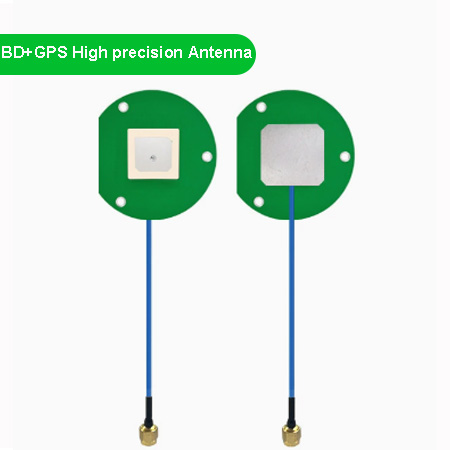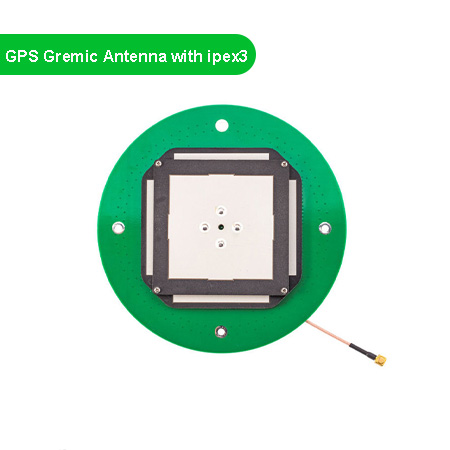

About the car position antennas solutions
When it comes to “automotive antennas”,market statistics indicate that the worldwide automotive sector will register a compound annual growth rate (CAGR) of 4.5% in the coming decade. This upward trend is mainly fueled by the advancement of connected cars, autonomous‑driving solutions, sophisticated in‑vehicle infotainment, ADAS (Advanced Driver Assistance Systems), intelligent transportation infrastructure and road‑safety‑oriented implementations.
Modern mart onboard functionalities covering intelligent vehicle infotainment and automatic parking are highly dependent on radio‑frequency antenna technologies. This creates rising demand from a car position antennas solutions and car positioning antennas solutions manufacturer. Effective Custom Car Antenna development and professional automotive antenna design and applications become essential for vehicle wireless connectivity. Engineers also keep evaluating the best position for gps antenna in car to deliver stable location reception. Reliable positioning antennas solutions for tracking car and high‑performance high gain Car position antenna help vehicle systems complete data exchange. As a professional solution company, we recognize that automotive antennas are vital hardware for wireless communications, which guarantees steady data transmission and seamless connectivity among vehicles, network facilities and smart end‑devices.
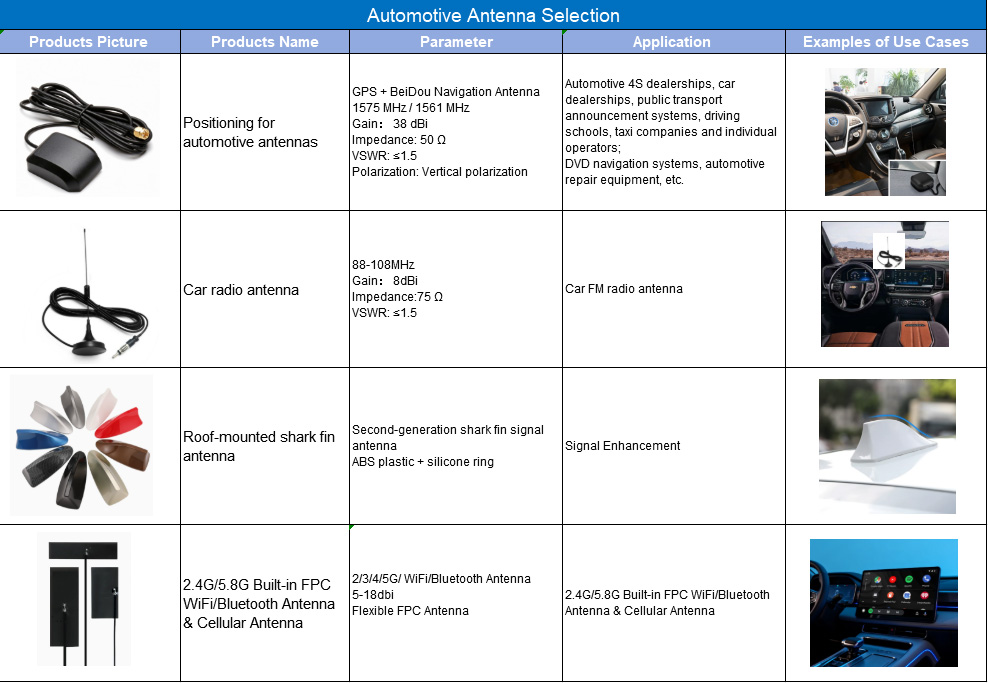
RF antennas are critical components in automotive systems and are widely used for various communication purposes. Automotive antennas come in different types and designs, with each configuration serving specific functions and technical requirements.
Automotive antenna technology plays a vital role in supporting the development of other advanced technologies, including network connectivity, GNSS (Global Navigation Satellite System), GPS positioning, and V2X (Vehicle‑to‑Everything) communication. By utilizing 3G, 4G, and 5G antenna technologies, vehicles can achieve faster data transmission speeds, enhanced connectivity, and improved safety performance.
Automotive RF antennas typically operate across a wide frequency range, from the AM band (535–1605 kHz) to millimeter‑wave frequencies (24 GHz, 77–81 GHz), enabling applications such as radio broadcasting, cellular communication, satellite positioning, vehicle networking, and advanced driver assistance systems (ADAS).

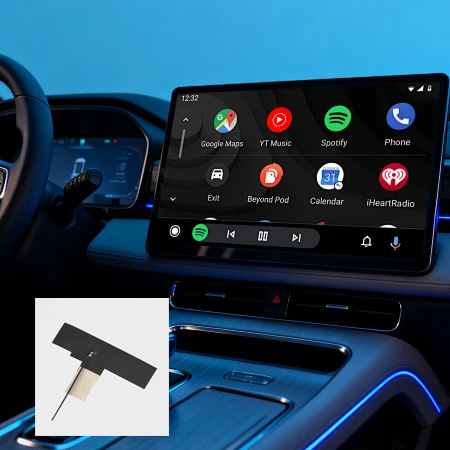
1. Automotive Antennas System: In‑Vehicle Infotainment System | car position antennas solutions
- Application:Advanced in‑vehicle infotainment systems integrate digital audio broadcasting (DAB), satellite radio, smartphone connectivity, navigation, gaming systems, instrument clusters, ADAS displays, head‑up displays (HUD), telematics, and other functions into a fully integrated intelligent cockpit ecosystem, supported by mature car position antennas solutions.
- Antenna Selection:
Flexible FPC Antennas:
Flexible FPC Antennas:Flexible FPC IoT antennas are becoming increasingly popular via professional automotive antenna design and applications, featuring ultra-thin, bendable, lightweight and hidden installation. Tailored Custom Car Antenna perfectly fits irregular vehicle interior structures, delivering high gain and stable signal performance for space‑limited automotive scenarios.
These flexible FPC antennas preserve vehicle aesthetics, support flexible array arrangement, and provide precise AoA resolution, ideal for advanced automotive communication and intelligent cockpit applications.
V2X Communication / Advanced Driver Assistance Systems (ADAS) | car position antennas solutions
- Application:
V2X Communication:
V2X Communication: Enables communication between vehicles and other entities, including road infrastructure, pedestrians, and wide‑area networks (WAN), improving traffic safety and efficiency.
ADAS: Provides intelligent driving assistance functions such as object detection, lane departure warning, pedestrian detection, traffic sign recognition, adaptive cruise control, parking assistance, collision avoidance, blind‑spot detection, automatic emergency braking, and driver monitoring, while relying on accurate vehicle positioning empowered by reliable car position antennas solutions. - Antenna Selection:Non‑planar antennas, such as whip antennas and shark‑fin antennas.
Whip Antennas:
Typically installed on the center of the vehicle roof, edges, or bumpers. Engineers always confirm the **best position for gps antenna in car** to avoid signal interference and ensure stable positioning data. They are widely used for VHF, UHF, cellular, LTE, and WLAN applications. However, their larger size affects vehicle aesthetics, and their limited bandwidth restricts multi‑band communication capabilities.
Shark‑Fin Antennas:
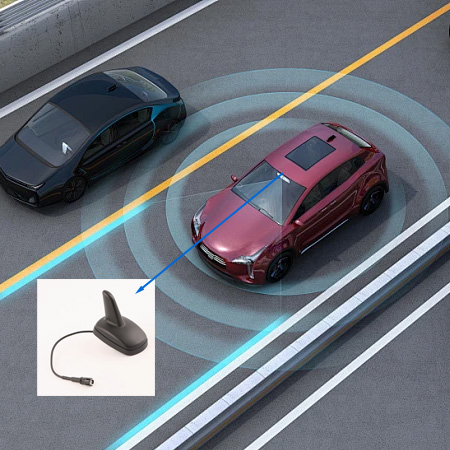
A modern automotive antenna solution featuring compact size, better appearance, and high durability. It integrates multiple antenna elements to support various applications, including professional **positioning antennas solutions for tracking car**, LTE MIMO PIFA antennas, 5.9 GHz V2X antennas, dual‑band WiFi (2.4 GHz/5 GHz), and GNSS/GPS patch antennas, making it ideal for connected vehicles and intelligent driving systems.