
How is Smartphone antenna design carried out?
I. Origin of Mobile Phones & Evolution of Smartphone Antennas.
The origin of mobile phones can be traced to the 1970s.
In 1973, Motorola invented the first personal-use handheld cellular mobile phone. When Martin Cooper, Director of Motorola, used the 1.1 kg mobile phone prototype to get through to his competitor Joel Engel, all audience erupted in thunderous applause. At this point, humans achieved the world’s first communication via a handheld cellular mobile phone.

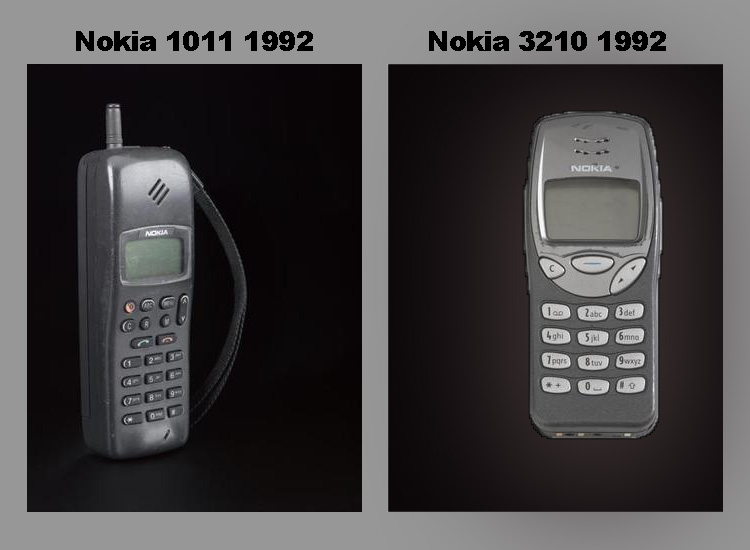
With the development and deployment of 2G digital networks, mobile phones became smaller, lighter and more feature-rich. They could send messages, set ringtones, play games and take photos. As entertainment functions expanded, mobile phones evolved from luxury items for business owners into affordable consumer products, represented by the Nokia 1011. In early feature phones, antennas were externally mounted, gradually changing from long rod structures to small finger-shaped parts. In 1999, Nokia launched the Nokia 3210, the first mobile phone with a built-in internal antenna. This hidden-antenna model became one of the best-selling phones ever, with total sales of 160 million units.
So, how exactly are Smartphone antennas design carried out?
II. Smartphone antenna types
An Overview of Modern smartphone Antenna Design
The antenna is a critical component of a mobile phone. Its performance directly affects communication quality and product success. In previous mobile phone projects, substandard antenna performance often caused project failure. Therefore, antenna selection must be carefully considered in the early stage of mobile phone design.
Mobile phone antennas can be broadly categorized based on their functionality and manufacturing process.
In terms of functionality:
| Type | Description | Common Forms |
|---|---|---|
| Cellular Antenna | Mainly for cellular communication, including 2G,3G,4G and 5G. | FPC, PCB, metal middle frame, laser direct structuring(LDS). |
| BLE & WiFi Antenna | For Bluetooth and wireless network communication | FPC is widely used; cable wire may be adopted in low-cost devices. |
| NFC Antenna | Near-field communication, such as mobile payment and tag reading. | Mostly FPC structure, embedded in battery cover. |
| GPS Antenna | Positioning & navigation with high performance requirement. | Ceramic antenna for high-end phones for precise positioning; FPC is also common. |
| FM Radio Antenna | Receive FM broadcast signals. | Telescopic rod antenna for some feature phones for the elderly. |
In terms of craftsmanship
| Type | Description | Material |
|---|---|---|
| FPC Antenna | Thin, light and bendable. With adhesive on the back for attaching to phone inner housing, great space adaptability | Flexible film substrate, copper trace |
| PCB Antenna | Printed circuit board antenna, routed directly on main PCB. Low cost and stable structure | Hard PCB board with copper traces, integrated on smartphone mainboard |
| LDS Antenna | Laser Direct Structuring. Saves phone internal space. A smartphone antenna solution for metal housing | Plastic support substrate + laser structuring + metal plating, 3D shaped |
| Ceramic Antenna | Ceramic dielectric antenna, low dielectric loss and stable signal | Ceramic substrate with metallized surface electrodes, mostly block patch type |
III. Smartphone Antenna Design Process
Phase 1: Smartphone Antenna Project Evaluation
- 1.Define requirements & specs. Upon receiving requests, confirm bands (2G/3G/4G/5G, Wi‑Fi, BLE, GPS) and specs (VSWR less than 3, efficiency, gain, SAR). Obtain motherboard layout and 3D drawings.
- 2.Antenna assessment. Check antenna clearance and mounting space. Coordinate with structural engineers if structural changes are needed.
- 3.EMI environment assessment. Analyze interference from battery, camera, screen, metal midframe; reserve safe clearance.
Phase 2: Antenna Type Selection
Select antenna type with suppliers based on space and performance, finalize initial routing.
Phase 3: Prototype Fabrication & Preliminary Tuning
Engineers build prototypes, verify performance and fine‑tune antenna traces or matching circuits.
Phase 4: System Tuning & Optimization
- 1.Unit Test. Mount the antenna onto real prototype for testing and provide test report with data.
- 2.Troubleshooting & Optimization. Based on test results, check interference from internal components, adjust antenna position, optimize matching network or modify mechanical structure.
Final Stage: Sampling Confirmation & Mass Production
- Sampling Confirmation. Produce samples according to tuning & test results, confirm final performance with customer and submit final test report.
- Tooling & Mass Production.
Anwei Wireless Technology provides one-stop cellular antenna design services,including smartphone antenna design, supporting FPC, PCB, LDS and ceramic antenna development for cellular, Wi-Fi, Bluetooth, NFC, GPS and other antennas. We cover preliminary evaluation, scheme selection, prototype tuning, system optimization and mass production, controlling RF performance to deliver stable wireless communication within limited device space.
Contact : HarrietWhatsAPP