
Half‑wave dipole antenna working principle
With the advent of the 5G era, antennas have gradually appeared in our daily lives and bring us a satisfying network experience. However, many beginners find it difficult to sort out various theories about antennas. Today we sort out all key communication antenna principles to help you get a clear understanding of the antenna principle.

Generally speaking, an antenna has two main functions. First, it converts high‑frequency electromagnetic energy in the transmission line into electromagnetic waves in free space. Second, it converts electromagnetic waves from free space back into high‑frequency electromagnetic energy within the transmission line. An antenna can be regarded as a four‑terminal network, as described below:
The transmitting and receiving mechanism of antennas forms the fundamental foundation for wireless communication. Essentially, signals are sent and received through the conversion of electromagnetic waves. Below is a detailed analysis covering **how does communication antenna transmit and receive signals**.
1.Antenna Transmitting Principle
Antenna principle of transmission is the process converting electrical signals into electromagnetic waves and radiating them out into space. The detailed steps are as follows:
- Electrical signal input: High‑frequency current generated by the transmitter flows to the antenna via the feeder.
- Electromagnetic wave generation: While current flows along the antenna conductor, varying electric and magnetic fields are created in surrounding space. According to Maxwell’s electromagnetic theory, alternating electric and magnetic fields excite one another to form electromagnetic waves.
- Electromagnetic wave radiation: Electromagnetic waves propagate outward from the antenna. Radiation characteristics depend on the antenna’s shape, physical dimension and operating frequency. For instance, a dipole antenna delivers the strongest radiation in the direction perpendicular to its axis.
3. Relationship Between Antenna Design and Electromagnetic Waves
Antenna reception converts electromagnetic waves travelling in space back into electrical signals. The detailed steps are as follows:
- Electromagnetic induction: When electromagnetic waves arrive near the antenna, the electric field induces high‑frequency current on the antenna conductor.
- Electrical signal output: The induced current travels through the feeder to the receiver. After amplification, demodulation and other signal‑processing procedures, original information (such as audio or images) is restored.
- Impedance matching & efficiency: Antenna receiving efficiency is strongly related to the matching between antenna physical size and electromagnetic wavelength. Typically, optimal receiving performance is achieved when the antenna length equals 1/4 or 1/2 of the operating wavelength.
3.Relationship Between Antenna Design and Electromagnetic Waves
- Wavelength and dimension: The physical size of an antenna is generally proportional to the electromagnetic wavelength. For example, quarter‑wave and half‑wave designs guarantee efficient operation at designated frequencies.
- Radiation pattern: The shape and mechanical structure of an antenna determine the directivity of electromagnetic radiation. A dipole antenna features a specific radiation pattern; directional antennas use reflectors to amplify signals towards targeted directions.
4. Functions of Antenna Dipole
The antenna dipole is the fundamental building block of an antenna. Its length and geometry directly influence the radiation and receiving efficiency for electromagnetic waves. As explained in **half‑wave dipole antenna working principle**, a half‑wave symmetric dipole (with length equal to 1/2 wavelength) can work independently or serve as the feed source for a parabolic antenna.
5. Application and Performance Optimization
Antennas are widely deployed in telecommunications, broadcasting, radar and satellite systems. To boost overall performance, antenna designers need to optimize impedance matching, minimize signal reflection and power loss, and adopt innovative materials such as plastic dipoles to cut costs and reduce weight.
Summary: The transmitting and receiving theory of antennas is built upon the conversion and propagation of electromagnetic waves. Antenna design is closely associated with wavelength, operating frequency and radiation pattern. Higher‑efficiency signal transmission and reception can be realized by optimizing antenna structure and materials.
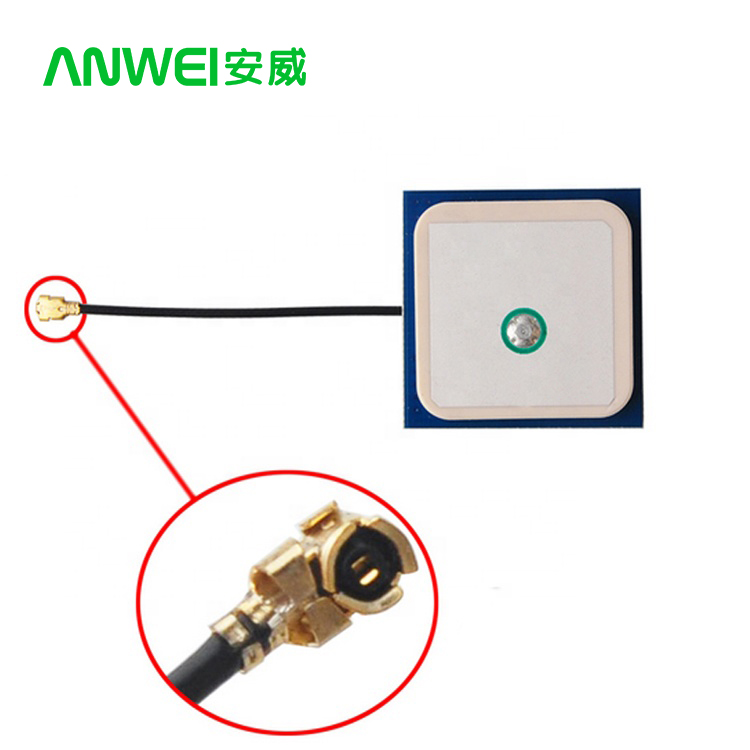
GPS ANTENNA
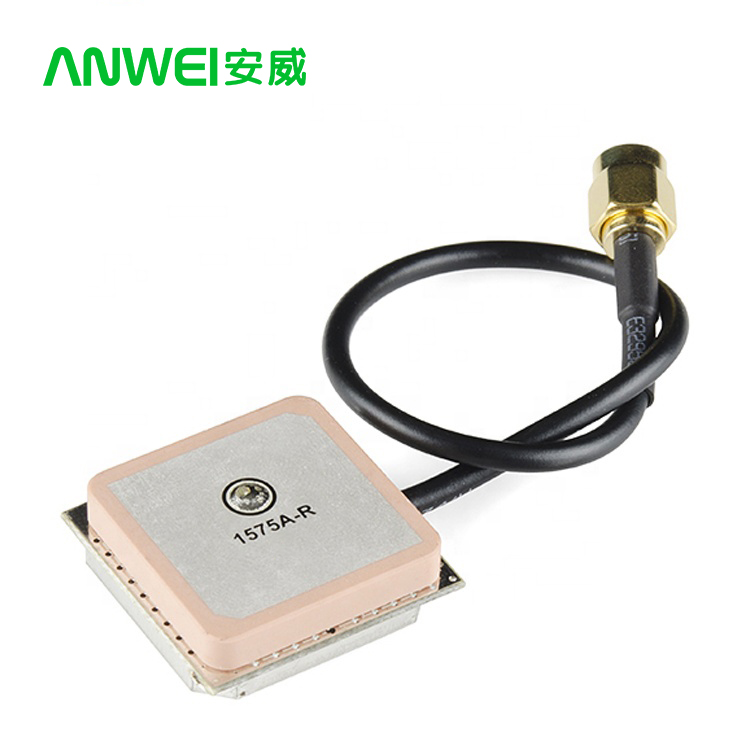
L1 L5 ANTENNA
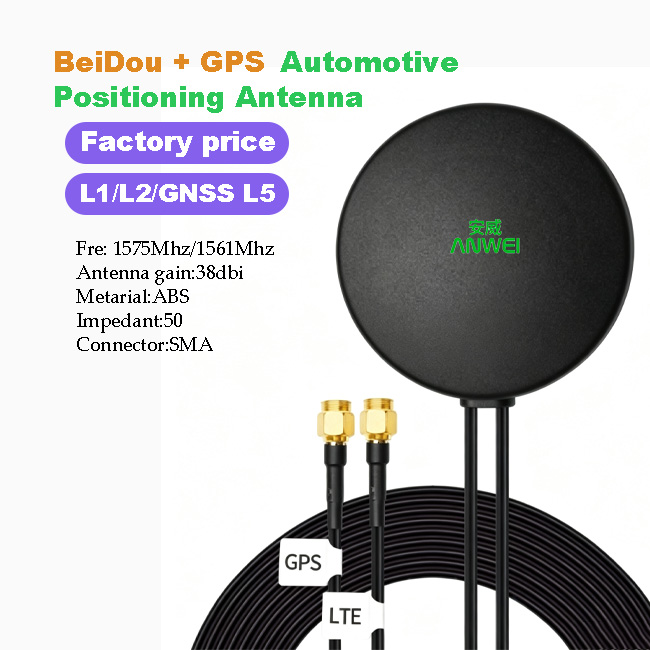
Vehicle Antenna

Vehicles GPS Antenna