
Why Does Antenna Tuning Fail? The Core Indicator of Antenna Tuning
Every new RF engineer will encounter the term “VSWR”. It is one of the most important parameters in antenna tuning.
If the VSWR is too high, it can cause excessive reflected power, reduce transmission efficiency, and, in some cases, even damage the RF equipment.
This article will tell you Why Does Antenna Tuning Fail? Understanding VSWR, antenna impedance matching, and proper antenna adjustment methods can help engineers identify and solve common antenna tuning problems.
What is VSWR?
This article will tell you Why Does Antenna Tuning Fail? Understanding VSWR, antenna impedance matching, and proper antenna adjustment methods can help engineers identify and solve common antenna tuning problems.
The VSWR is a key indicator used to measure the degree of impedance mismatch. If you want to understand Why Does Antenna Tuning Fail?, VSWR is one of the most important parameters to check.
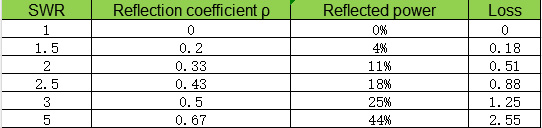
- SWR = 1.0: Perfect match, no reflections.
- SWR = 1.5: Approximately 4% of the power is reflected, which is considered good.
- SWR = 2.0: Approximately 11% of the power is reflected, which is generally acceptable.
- SWR = 3.0: Approximately 25% of the power is reflected, indicating that adjustment is required.
- SWR > 3.0: A high level of mismatch that may potentially damage the radio.
II. Why is VSWR Important?
Efficiency: High SWR means a large amount of power is reflected and not radiated.
2. Equipment safety: Reflected power returns to the final-stage power amplifier of the radio, potentially burning out transistors.
3. Signal quality: Mismatch causes standing waves on the feeder, affecting signal transmission.
4. Antenna evaluation: The lowest SWR point is an important reference for evaluating the antenna’s matching condition.
5. Antenna impedance matching: VSWR is an important indicator for checking whether the antenna and feeder are properly matched.
When engineers ask Why Does Antenna Tuning Fail?, high VSWR and poor antenna impedance matching are important factors to consider.
III. How is VSWR Calculated?
The Relationship Between SWR and Reflection Coefficient
ρ: SWR = (1 + ρ) / (1 – ρ)
ρ = √(Reflected Power / Incident Power)
This relationship can help explain Why Does Antenna Tuning Fail? when the measured VSWR is higher than expected.
IV. How to Measure SWR?
1. Standing Wave Meter (SWR Meter)
The most commonly used measuring tool, connected in series between the radio and the antenna.
Usage: Connect the SWR meter between the radio and the antenna. Set the radio to low power output (5–10 W), switch to the FWD (forward) setting, adjust the CAL knob until the pointer reaches full scale, switch to the REF (reflection) setting, and read the SWR value.
Correct VSWR measurement is important when determining Why Does Antenna Tuning Fail? because inaccurate measurements can lead to incorrect antenna adjustments.
2. Antenna Analyzer
An antenna analyzer is an instrument that can measure SWR without radio transmission. It can scan SWR curves across the entire frequency band. Examples include the MFJ-259B and RFinder.
An antenna analyzer can help engineers identify Why Does Antenna Tuning Fail? by showing the SWR curve across the target frequency range.
3. NanoVNA
NanoVNA is a vector network analyzer costing around 200 RMB, capable of measuring multiple parameters such as SWR, impedance, and phase, displaying the curves on a computer or mobile phone.
It is currently one of the most cost-effective antenna tuning tools and is especially useful for VSWR measurement. For engineers trying to determine Why Does Antenna Tuning Fail?, NanoVNA provides a convenient way to check antenna performance.
V. Antenna Adjustment Methods and Scenarios
Scenario 1: If the lowest SWR point is too high
If the lowest SWR point is too high, the antenna is too short – the element needs to be lengthened.
For example, the target frequency is 7.050 MHz, but the lowest SWR point is at 7.100 MHz, indicating the antenna resonates at a higher frequency and needs to be lengthened.
Scenario 2: If the lowest SWR point is too low
If the lowest SWR point is too low, the antenna is too long – the element needs to be shortened.
Important: Shortening is irreversible! Shorten only 1–2 cm at a time, remeasure, and then decide.
Scenario 3: If the SWR is high across the entire frequency band
If the SWR is high across the entire frequency band, check if the feeder is damaged, check if the connectors have poor contact, check if the balun is working properly, check if there are any metal objects interfering near the antenna, and check if the antenna is short-circuited to ground.
These problems can affect antenna impedance matching and may explain Why Does Antenna Tuning Fail? even when the antenna itself appears to be correctly designed.
Scenario 4: If the SWR cannot be reduced below 1.5
If the SWR cannot be reduced below 1.5, the antenna impedance may not be 50 ohms.
Use an antenna tuner (ATU) to match the impedance or add an impedance converter (such as a 4:1 balun).