
RF Antenna Class: Detailed Explanation of Wireless Communication Antennas
People can make calls and video calls through a mobile phone, and devices can transmit files and data to each other. All of this relies on antennas. More precisely, as long as signals are transmitted through electromagnetic waves, a wireless antenna is indispensable.
When facing various types of antennas, we often feel confused: What exactly do these antennas do? Where are they used? What is the difference between built-in and external antennas? How should we choose between omnidirectional and directional antennas?
This article introduces common antennas on the market and explains how antennas work, as well as their classifications and applications.
What’s an Antenna?
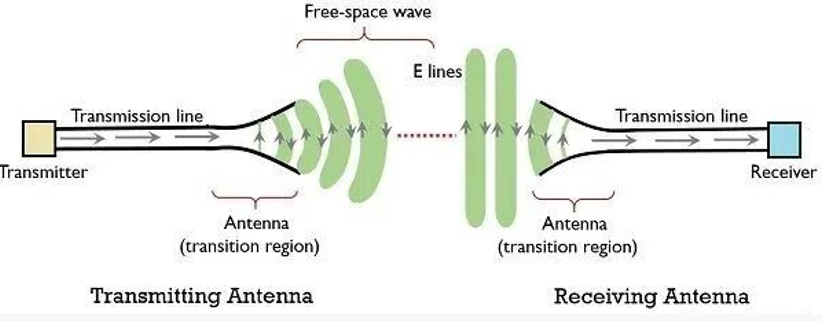
An RF antenna is essentially an energy converter and an interface between a circuit and free space.
The main functions of an antenna are transmitting and receiving. In the transmitting state, it converts the guided wave on the transmission line (high-frequency current/signal) into electromagnetic waves propagating through free space and radiates them outward. In the receiving state, it captures electromagnetic waves from space and converts them into signals on the transmission line, which are then sent to the receiving circuit.
The Reciprocity Principle of Antennas
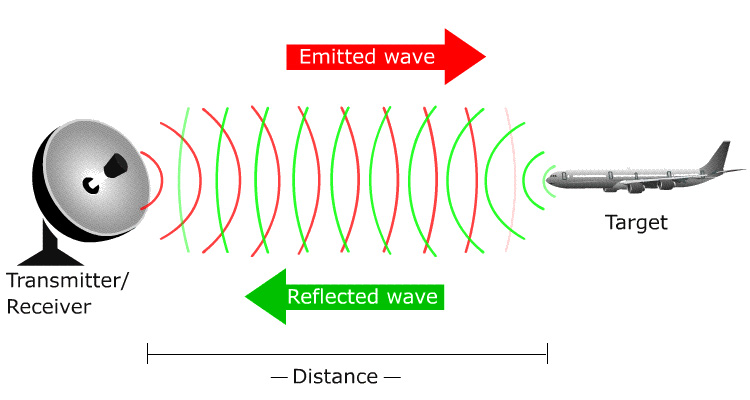
RF antenna has a very important characteristic: reciprocity. Simply put, the same antenna can be used as both a transmitter and a receiver, and its key electrical parameters, such as gain, radiation pattern, impedance, and polarization, remain exactly the same.
Basic Working Principle of Antennas
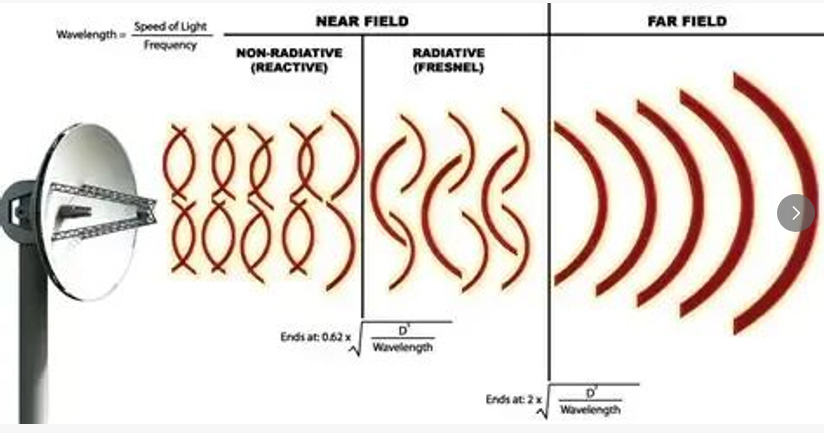
n an experiment, when a high-frequency current is applied to a conductor, an alternating electromagnetic field is generated around the conductor. According to the spatial distance, it can be divided into two regions:
Near field (R ≤ λ/2π): The electromagnetic field is strongly coupled with the current and voltage on the conductor, making it difficult for energy to radiate outward.
Far field (R ≥ λ/2π): The electromagnetic field becomes independent of the conductor and propagates freely, forming a radiation field that can effectively transmit signals.
The closer the conductor length is to the wavelength of the operating signal, the stronger its radiation capability. Therefore, the size of an RF antenna also varies with different frequency bands.
How to Understand Antenna Parameters?
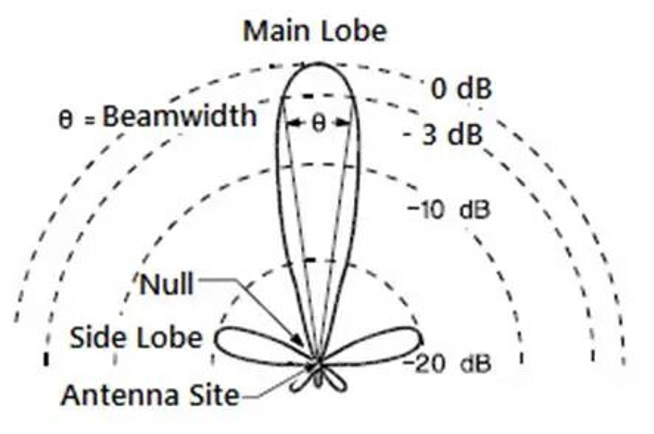
Antenna Gain: Indicates the effective utilization and concentrated radiation capability of the antenna for the input power, measured in dB.
Antenna Efficiency: The ratio of the actual radiated power to the input power, which is always less than 1.
Antenna Polarization: The trajectory of the electric field vector of an electromagnetic wave, which directly affects signal transmission and reception matching.
Directivity: The degree to which the antenna concentrates radiated energy in space.
What Does Antenna Polarization Mean?
There are five antenna polarization types. Polarization is a key factor in matching wireless communication systems and is mainly divided into three categories:
Linear Polarization
Vertical Polarization: The electric field direction is perpendicular to the ground (mainstream in broadcasting and base stations).
Horizontal Polarization: The electric field direction is parallel to the ground (used in television and some microwave systems).
Circular Polarization: The endpoint of the electric field vector rotates over time, forming a circular trajectory. It is divided into left-hand circular polarization and right-hand circular polarization (commonly used in satellites, GPS, and drone video transmission).
Elliptical Polarization: The most common form of polarization in practical engineering, between linear polarization and circular polarization.
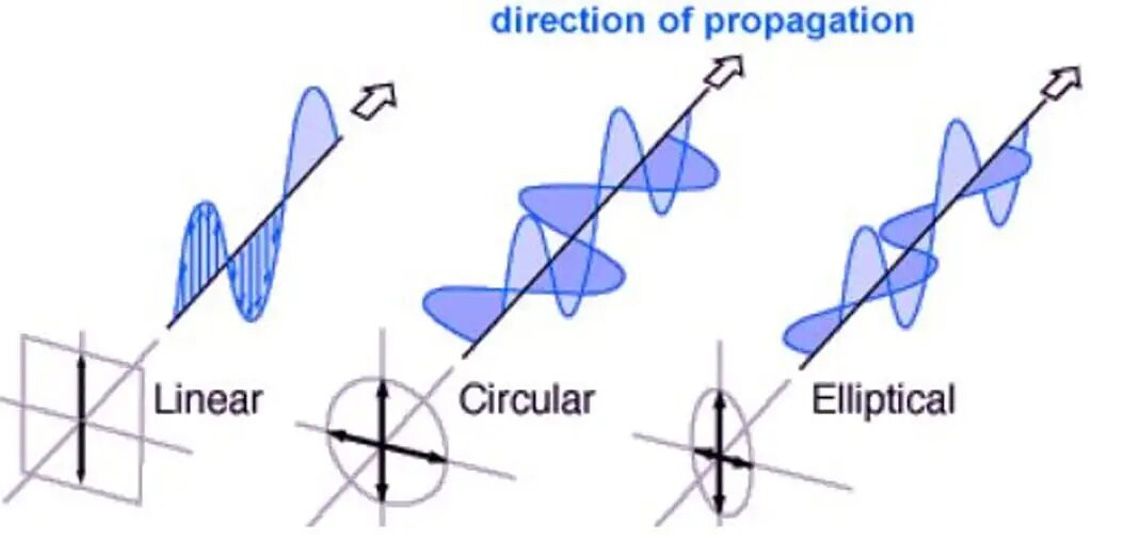
Antenna Class Summary
- Antenna = the interface between the circuit and space + an energy converter.
- Omnidirectional antenna: Wide coverage with no dead zones; directional antenna: Longer transmission distance and stronger interference resistance
- Built-in antenna: Compact and aesthetically pleasing, used in mobile phones and IoT devices; external antenna: Higher gain, used in base stations and industrial applications.
- Core principle: Lower frequency → longer wavelength → larger antenna size.
Related Articles
how to choose a gnss-positioning antennahow to design an embedded antenna
bluetooth-antenna-best-for-lotdevices