
How to Design an Embedded Antenna?
Antennas can generally be divided into two major categories: embedded antennas and external antennas. External antennas are usually easier to install and can be positioned in a relatively open environment with fewer surrounding obstructions. In contrast, an embedded antenna is installed partially or completely inside the terminal device and often requires customized design according to the product structure.
Depending on the terminal device, an embedded antenna can vary significantly in structure, size, operating frequency, and RF performance. To achieve optimal wireless performance, several important factors should be considered during the initial product design stage.
1.How to Design an Embedded Antenna and Determine Its Space and Dimensions?
1.1 Embedded Antenna Space and Dimension Design
An embedded antenna needs to be partially or completely installed inside the terminal device. Therefore, the available installation space and surrounding environment are the primary factors that need to be considered.
The environment around the antenna, including the mechanical structure and materials, can affect the antenna’s operating frequency, VSWR, and radiation characteristics. Metal components in particular can have a significant impact on antenna performance.
The available internal installation space also indirectly determines the approximate size of the antenna. In theory, a larger antenna can provide more possibilities for achieving better RF performance.
1.2 Embedded Antenna Design Guidelines for Space‑Limited Devices
First, the available internal space should be utilized as efficiently as possible. In addition to the antenna dimensions, we also need to consider the size of the PCB and shielding can, as well as how the antenna will be secured inside the device. Whether choosing an embedded PCB antenna or an internal FPC antenna, sufficient communication with the mechanical/structural designer is essential during the early design stage.
Second, when conditions permit, the antenna should be positioned as close as possible to an area facing the sky. Here, the position refers to the orientation of the terminal during actual use. For example, when using a handheld phone, the device is normally held at a certain angle relative to the horizontal plane. Therefore, the antenna in a handheld device should avoid being parallel to the screen or the top surface, so that the antenna can maintain a favorable orientation toward the sky during use.
Third, the space above the antenna’s radiation surface should be kept free of other metal structures whenever possible. In particular, the antenna should be kept away from the display. Previous design cases have shown that the screen can be one of the major sources of interference in the overall device design.
Fourth, the space around the antenna should maintain structural symmetry as much as possible. A symmetrical antenna structure can help maintain a more symmetrical radiation pattern.
Fifth, any embedded antenna needs to be matched and tuned inside the complete device. The main purpose is to tune its operating frequency and impedance matching. The antenna should not be considered fully qualified simply because it performs well when tested separately outside the device. If the entire device is redesigned or its structure is changed, the antenna may require secondary tuning; otherwise, its RF performance may also change.
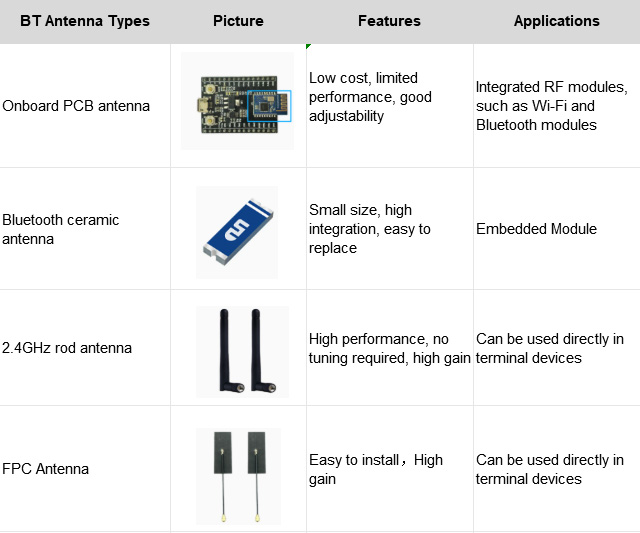
2.Embedded Antenna Performance Considerations
The size of an antenna is generally related to its potential RF performance. Therefore, when conditions permit, more installation space should be reserved for the antenna. This is also one of the reasons why professional handheld communication devices are often larger than ordinary handheld devices.
Fully Consider Factors That May Cause Antenna Interference
When designing an embedded antenna, the influence of the mechanical structure and electromagnetic environment on antenna performance must be fully considered.
The circuit boards and modules inside the device may generate unwanted interference signals, which can couple into the antenna and affect the subsequent RF processing. WiFi modules, radio modules, communication modules, and other electronic components can generate complex electromagnetic signals that may also affect antenna performance.
To minimize the impact of individual modules on antenna performance, the first step is to provide appropriate shielding for each module. When multiple modules are integrated into the same device, their structural distribution should also be carefully designed. Proper common‑ground design is one of the effective methods for reducing electromagnetic interference inside the device.
The Impact of Cost Factors
Customized products generally cost more than standard products. The main reasons are that customized materials have less commonality, resulting in a higher unit cost, while customization also requires additional engineering time for design, debugging, and tuning.
As an end‑product manufacturer, when designing and ordering an antenna, it is important to communicate fully with the antenna supplier. This can help identify potential design problems at an early stage and avoid difficulties in later‑stage tuning and optimization.
If you need a custom embedded antenna or antenna tuning service, please contact Anwei Wireless Antenna Factory. We have been professionally engaged in antenna R&D, design, and manufacturing for 18 years. We have always made customer service our core focus and strive to meet the specific requirements of every customer.
Contact us for a customized antenna solution. Whatsapp:https://wa.me/8616625191516
Related articles
how to choose an iot antennabluetooth antenna best for iot devices